U.S. Citizenship and Immigration Services (USCIS) is issuing updated guidance in the USCIS Policy Manual explaining how the agency will determine whether an alien applying for adjustment of status to that of a lawful permanent resident is likely at any time to become a public charge.
U.S. Citizenship and Immigration Services (USCIS) is issuing policy guidance in the USCIS Policy Manual to address the public charge ground of inadmissibility under section 212(a)(4) of the Immigration and Nationality Act (INA). This revised guidance stems from the rescission of the Public Charge Ground of Inadmissibility (“2022 Final Rule”). This guidance becomes effective September 18, 2026.
The Office of Foreign Labor Certification (OFLC) has released a comprehensive set of public disclosure data (through the third quarter of fiscal year 2026) drawn from employer applications requesting prevailing wage determinations and labor certifications for the PERM, LCA (H-1B, H-1B1, E-3), H-2A, H-2B, CW-1, and Prevailing Wage programs.
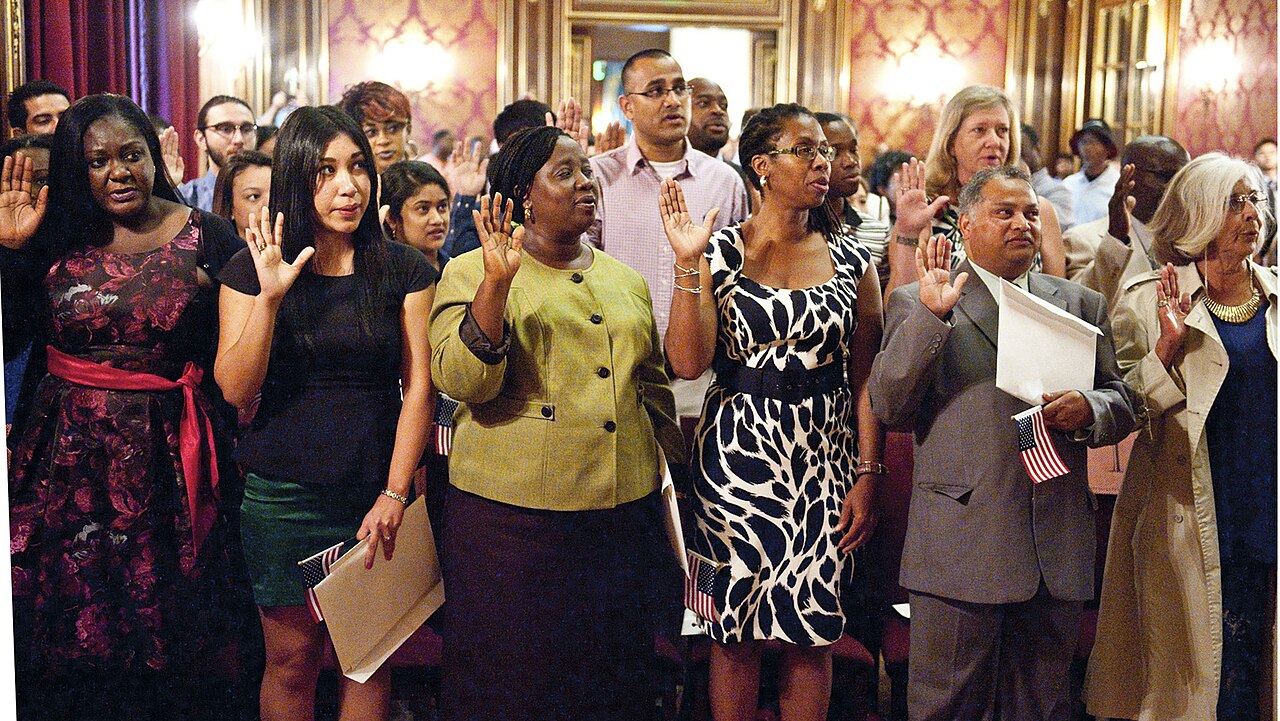
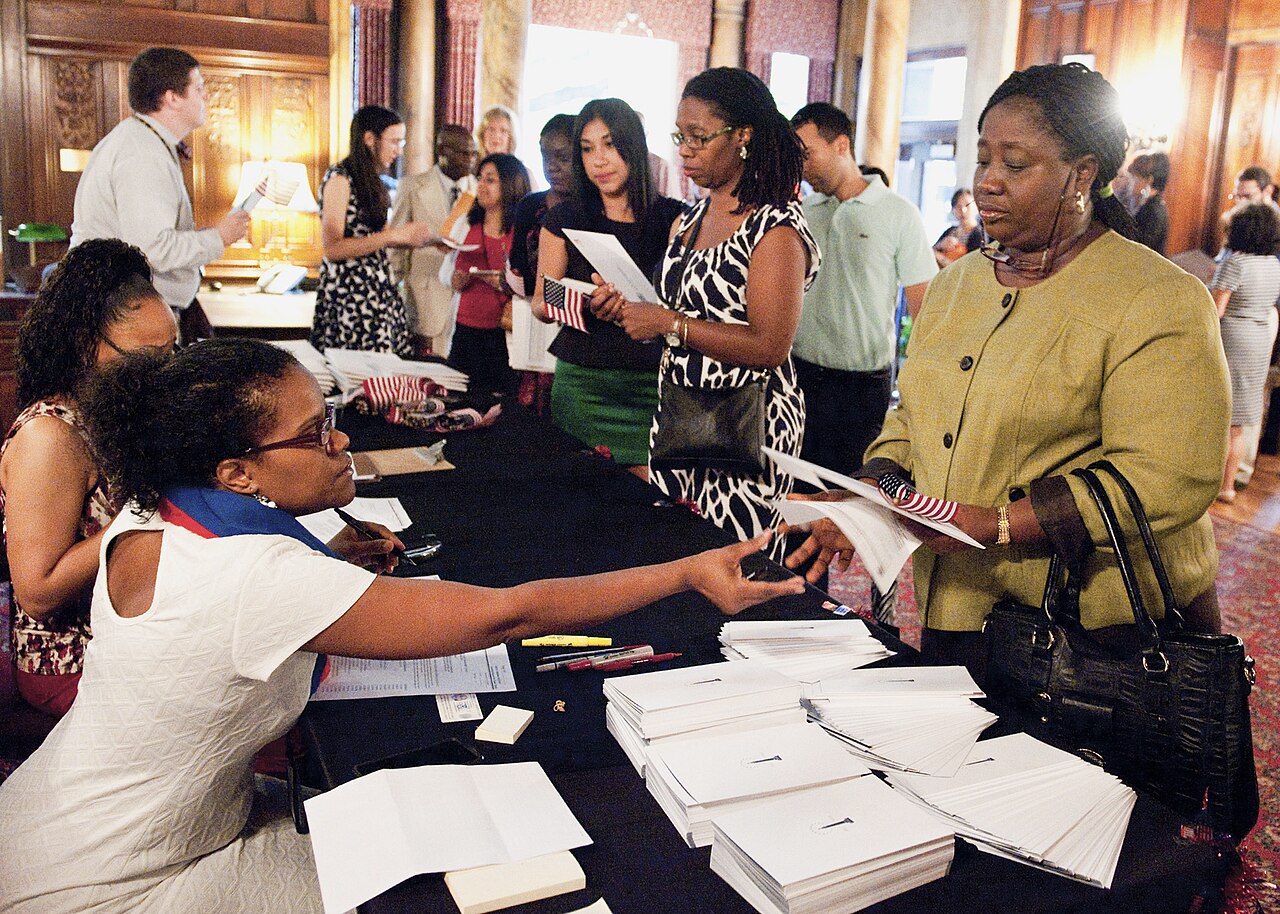
U.S. Citizenship and Immigration Services (USCIS) is temporarily reverting to the June 28, 2017 policy guidance on non-governmental organization participation in administrative naturalization ceremonies, consistent with the court order in League of Women Voters v. USCIS , No. 25-cv-3777 (D. Md. Aug. 3, 2025). Pending final resolution of the litigation, this guidance permits nonprofit and nonpartisan non-governmental organizations to participate in administrative naturalization ceremonies by distributing and collecting voter registration applications and officially registering new citizens to vote following the ceremony, when state and local election offices are not available to do so. As of August 31, 2026, U.S. Citizenship and Immigration Services (USCIS) is rescinding PA-2025-21, Voter Registration at Administrative Naturalization Ceremonies, and the related provisions. The USCIS Policy Manual version effective June 28, 2017, found in Volume 12, Part J, Chapter 5, Sections F and H, is reinstated.
The Department of Homeland Security (DHS) is introducing an interim final rule (IFR) that allows U.S. Citizenship and Immigration Services (USCIS) to mandate electronic filing, or e-filing, for certain immigration forms.
U.S. Citizenship and Immigration Services (USCIS) is issuing policy guidance in the USCIS Policy Manual that removes references to the Diplomatic List (also known as the “Blue List”), which is no longer published by the U.S. Department of State (DOS).
U.S. Citizenship and Immigration Services (USCIS) is updating policy guidance in the USCIS Policy Manual regarding evidentiary standards, Requests for Evidence (RFEs), and Notices of Intent to Deny (NOIDs).
U.S. Citizenship and Immigration Services (USCIS) is clarifying that benefit requestors should establish eligibility for an immigration benefit at the time they file a benefit request.
U.S. Citizenship and Immigration Services (USCIS) is issuing policy guidance in the USCIS Policy Manual to require officers to suggest Deoxyribonucleic Acid (DNA) testing as an optional form of evidence to establish a claimed genetic relationship in cases where primary evidence is unavailable, unreliable, or insufficient to establish a claimed genetic relationship, in situations where an officer determines additional evidence is necessary.
On July 17, 2026, the U.S. Department of Homeland Security (DHS) published a final rule in the Federal Register, “ Establishing a Fixed Time Period of Admission and an Extension of Stay Procedure for Nonimmigrant Academic Students, Exchange Visitors, and Representatives of Foreign Information Media .” Once the final rule takes effect on Sept. 15, 2026, nonimmigrants in the F (academic student) category will be admitted to the United States for a fixed period of time instead of duration of status. F students and designated school officials (DSOs) should review the final rule to understand the changes to the F student lifecycle.
U.S. Citizenship and Immigration Services has received enough petitions to reach the congressionally mandated 65,000 H-1B visa regular cap and the 20,000 H-1B visa U.S. advanced degree exemption, known as the master’s cap, for fiscal year 2027.
U.S. Citizenship and Immigration Services (USCIS) is issuing policy guidance in the USCIS Policy Manual regarding attorneys and representatives, consolidating and updating guidance that was previously contained in the Adjudicator’s Field Manual (AFM).
Policy update
Help & contactHelp & contact
Esc
↑↓ Select↵ Go to⌘K Shortcuts
Save image
You can also save the image by long-pressing it on your phone.
Add an immigration planner on WeComAdd an immigration planner on WeComTOP EASIER | IMMITONG, since 2014 yearTOP EASIER | IMMITONG, since 2014
Scan with WeChat, or long-press to recogniseScan with WeChat, or long-press to recognise
A real person, one-to-one, not a customer service botA real person, one-to-one
Free assessment; sign only after it passesFree assessment; sign only after it passes
Replies on weekdays 9:00–18:00Replies on weekdays 9:00–18:00
IMMITONG is an information technology and document assistance platform. Unless explicitly provided by licensed attorneys/law firms, we do not offer legal advice and no attorney-client relationship is formed. Outcomes are subject to adjudicator discretion; no results are promised or guaranteed.
IMMITONG is an information technology and document assistance platform. Unless explicitly provided by licensed attorneys/law firms, we do not offer legal advice and no attorney-client relationship is formed. Outcomes are subject to adjudicator discretion; no results are promised or guaranteed.