
Overview of the U.S. Immigration System: Pathways to Lawful Permanent Residence and Annual Quotas
This article, adapted from American Immigration Council materials, outlines the basic framework of the U.S. legal immigration system, covering family-based, employment-based, refugee and asylum, diversity visa, and naturalization pathways, along with annual quotas and allocation mechanisms for each category.
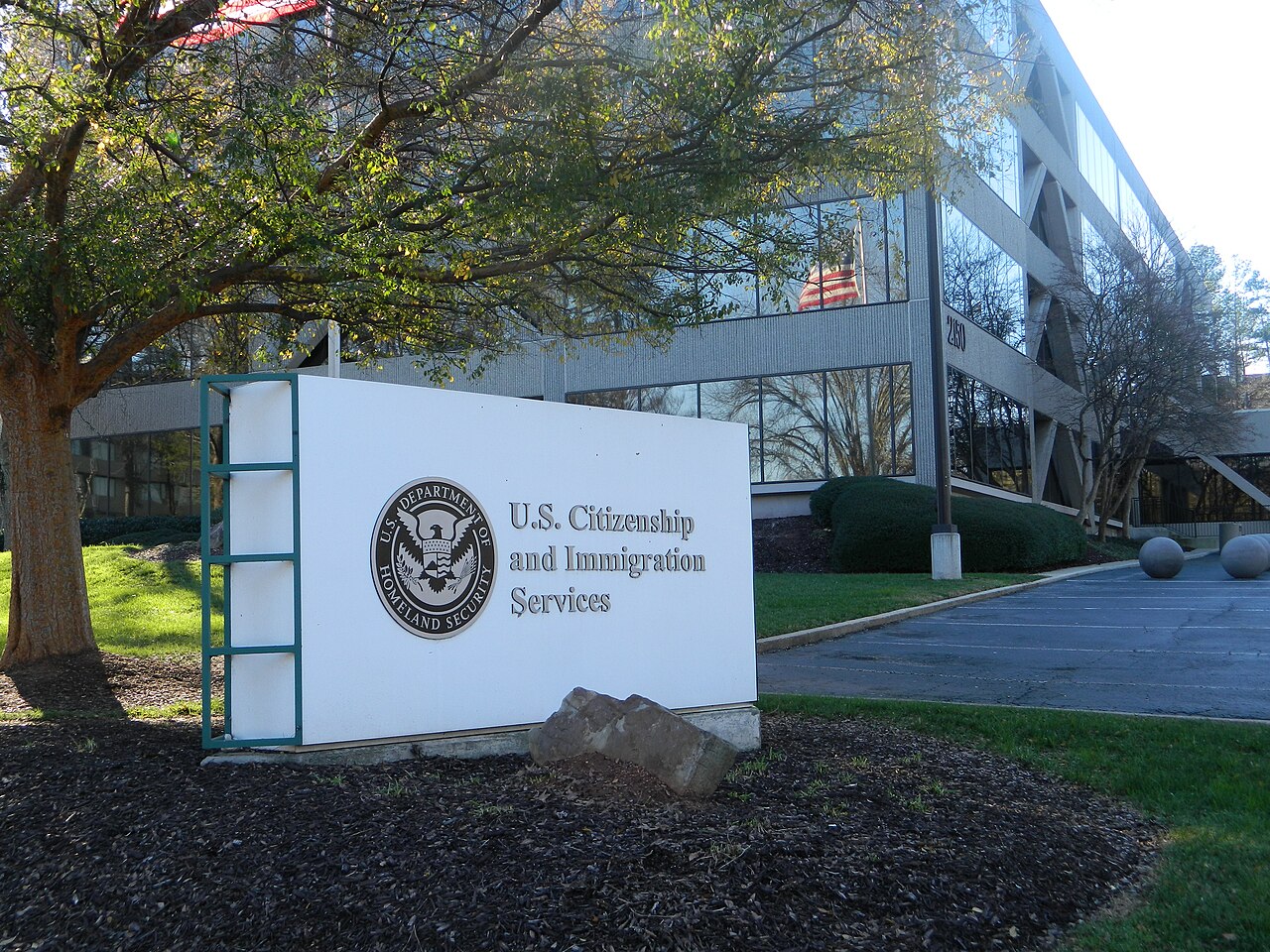
U.S. immigration law is based on the following principles: family reunification, admitting immigrants with skills valuable to the U.S. economy, protecting refugees, and promoting diversity. This article is compiled from a piece by the American Immigration Council and provides basic information on how the U.S. legal immigration system is designed and operates; during compilation, we added many annotations to facilitate understanding for Chinese and China-based readers.
###
The legal framework governing U.S. immigration policy is the Immigration and Nationality Act (INA). The INA allows the United States to issue 675,000 permanent immigrant visas (green cards) each year across various categories. Beyond these 675,000 visas, the INA places no annual limit on the admission of immediate relatives of U.S. citizens—spouses, parents, and children under 21. In addition, the President must consult with Congress each year and determine the number of refugees to be admitted through the U.S. Refugee Admissions Program.
Once an individual obtains an immigrant visa and arrives in the United States, they become a lawful permanent resident (i.e., a green card holder, legally abbreviated as LPR, Legal Permanent Resident). In certain cases, noncitizens already present in the United States may obtain LPR status through a process called "adjustment of status."
LPRs are eligible to apply for nearly all jobs (i.e., jobs not lawfully restricted to U.S. citizens), and they may remain in the United States permanently even if unemployed. After residing in the United States for five years (or three years in certain cases), LPRs are eligible to apply for U.S. citizenship. Without first becoming an LPR, one cannot apply for citizenship through the normal process.
[embed-post id=15153]
The United States also admits various noncitizens on a temporary basis each year. These "nonimmigrant" visas are issued to everyone from tourists to foreign students to temporary workers authorized to stay in the country for several years. While some employment-based visas (primarily H-1B) are subject to annual caps, other nonimmigrant visas (including tourist and student visas) have no numerical limits.
Family-Based Immigration
Family reunification is a key principle of U.S. immigration policy. The family-based immigration system allows U.S. citizens and LPRs to bring certain family members to the United States. Family-based immigrants may qualify for admission either as immediate relatives of U.S. citizens (no waiting list, no numerical limit) or through the family-based preference system (subject to waiting lists and numerical limits).
Immediate relatives of U.S. citizens may obtain an unlimited number of visas each year. Prospective immigrants in this category must meet standard eligibility criteria, and the petitioner must satisfy certain age and financial requirements. Immediate relatives include:
- Spouses of U.S. citizens;
- Minor children (under 21) of U.S. citizens; and
- Parents of U.S. citizens (the petitioner must be at least 21 years old when petitioning for a parent).
Under the family preference system, the number of visas available each year is limited. Prospective immigrants under the family preference system must meet standard eligibility criteria, and the petitioner must satisfy certain age and financial requirements. The family preference system includes:
- Adult children (married and unmarried) and siblings of U.S. citizens (the petitioner must be at least 21 years old when petitioning for a sibling); and
- Spouses and unmarried children (both minor and adult) of LPRs.
To balance the total number of family-based immigrants, Congress established a complex system for calculating the number of family preference visas available in any given year: the base number is 480,000 (the maximum number in principle allocated to all family-based immigrants), minus the number of immediate relative visas issued in the previous year and the number of foreigners admitted to the United States on "parole" in the previous year. The number of unused employment-based visas from the prior year is then added to that total to determine the number of visas that may be allocated through the family preference system.
However, by law, the number of family-based visas allocated through the preference system may not fall below 226,000. The number of immediate relatives often exceeds 250,000 in a given year, and combined with the 226,000 minimum for preference visas, this frequently causes the total number of family-based visas to exceed 480,000. In fiscal year 2019, family-based immigrants accounted for 68.8% of all new immigrants to the United States. The family-based immigration system is summarized in Table 1.
Table 1: Family-Based Immigration System
| Preference Category | U.S. Sponsor | Family Relationship | Numerical Limit |
|---|---|---|---|
| Immediate Relatives | U.S. Citizen | Spouses, minor children, parents | Unlimited |
| 1 | U.S. Citizen | Unmarried adult children | 23,400 [1] |
| 2A | Lawful Permanent Resident | Spouses and minor children | 87,900 |
| 2B | Lawful Permanent Resident | Unmarried adult children | 26,300 |
| 3 | U.S. Citizen | Married adult children | 23,400 [2] |
| 4 | U.S. Citizen | Siblings | 65,000 [3] |
[1] Plus unused visa numbers from the fourth preference category [2] Plus unused visa numbers from the first and second preference categories [3] Plus unused visa numbers from other family-based categories
To qualify for admission through the family-based immigration system, a U.S. citizen or lawful permanent resident (LPR) sponsor must file a petition for a family member, prove the legitimacy of the family relationship, meet a minimum income requirement, and sign an affidavit of support. This affidavit states that the sponsor will provide financial support to the family member upon their arrival in the United States or upon adjustment to lawful permanent resident status within the United States.
[embed-post id=38873]
The family member must also meet certain eligibility requirements, including undergoing a medical examination and receiving required vaccinations (including the COVID-19 vaccine), undergoing immigration or criminal history background checks, and demonstrating that they will not primarily rely on the government for subsistence.
[embed-post id=17255]
Spouses and children accompanying or following to join a principal immigrant are called derivative immigrants. Derivative immigrants are also counted toward the numerical limits for each category in Table 1. This means that many visa numbers allocated to members of these categories are in practice often used by their spouses and children. For example, in fiscal year 2019, 61,031 people were admitted as "siblings" of U.S. citizens, but only 22,179 of them were the actual brothers or sisters of U.S. citizens; the rest were spouses (14,956) and children (23,896) of U.S. citizens' siblings.
Employment-Based Immigration
The United States offers various pathways for immigrants with valuable skills to come to the country on a long-term or short-term basis.
1. Temporary Status Categories
Employment-based temporary visa categories allow employers to hire foreign nationals for specific jobs and petition for visas on their behalf for a limited period. Most temporary workers must work for the employer that petitioned for them, and changing jobs is restricted. There are more than 20 types of temporary nonimmigrant visas, including:
- L-1 visas, for intracompany transfers;
- Various P visas, for athletes, entertainers, and skilled performers;
- R-1 visas, for religious workers;
- Various A visas, for diplomats;
- O-1 visas, for workers with extraordinary ability;
- and various H visas, covering both high-skilled and lower-skilled workers (including the most familiar H-1B, the most common visa category for international students seeking jobs, with an annual quota of 65,000, plus an additional 20,000 for those with a master's degree or higher, totaling 85,000; in addition, H-1B petitions sponsored by employers such as institutions of higher education are not subject to the numerical cap, which is an important reason many people go to teach at universities — no lottery is required).
These visa categories differ in eligibility requirements, duration of validity, whether workers may bring family members, and other factors. In most cases, if their status expires or the employment relationship ends, these workers must leave the United States. Depending on the type of work and the foreign national's qualifications, the employer may be able to petition for permanent work status for the worker. A foreign national does not always have to be employed by the employer petitioning for their permanent status. However, depending on the permanent immigration category sought and the foreign national's current nonimmigrant category, he or she may be able to apply for a green card while continuing to live and work in the United States.
2. Permanent Status (Employment-Based Immigration)
The annual total for employment-based permanent immigration is capped at 140,000. This number includes the immigrants themselves plus their eligible spouses and unmarried minor children, meaning the actual number of employment-based immigrants is less than 140,000 each year.
In addition, unused family immigration quotas from the previous year are added to this cap. For example, during the pandemic, a large number of family immigration visas could not be issued and were added to the employment-based quota the following year, causing the employment-based quota to surge to over 200,000 in the past two to three years.
Employment-based immigrant visas are divided into five preference categories. For certain categories, the petitioner must first test the U.S. labor market under rules established by the Department of Labor (i.e., PERM labor certification), demonstrating that the application meets certain requirements. At the final step, the foreign national must apply for an immigrant visa at a U.S. embassy or consulate; alternatively, if the applicant is currently lawfully present in the United States, they may file Form I-485 to adjust status. In consular processing, the immigrant visa application can only be submitted after USCIS approves the immigrant petition; for adjustment of status, the timing of filing depends on Table B in the Visa Bulletin.
[embed-post id=14941]
The employment-based immigration system is summarized in Table 2.
Table 2: Employment-Based Immigration Preference System
| Preference Category | Eligibility | Numerical Limit |
|---|---|---|
| 1 | ++ Persons with extraordinary ability in the arts/sciences/education/business/athletics ++ Outstanding professors and researchers ++ Multinational corporation managers | 40,040 [1] |
| 2 | ++ Persons with advanced degrees ++ Persons with exceptional ability in the arts/sciences/business | 40,040 [2] |
| 3 | ++ Skilled workers with at least two years of training or work experience ++ Professionals holding a university degree ++ Other non-temporary or non-seasonal unskilled workers | 40,040 [3] |
| 4 | ++ Special immigrants ++ Religious workers ++ Employees of U.S. missions abroad ++ Former U.S. government employees | 9,940 |
| 5 | Investment immigration (90/180万美元 investment, 10 workers) | 9,940 |
[1] plus unused numbers from the 4th and 5th preference categories [2] plus unused numbers from the 1st preference category [3] plus unused numbers from the 1st and 2nd preference categories; the quota for other unskilled workers is limited to 5,000
Per-Country Immigration Caps
In addition to numerical limits on various immigrant preference categories, the Immigration and Nationality Act (INA) also limits the number of immigrants from any single country. Currently, no permanent immigrant group from a single country (including both family-based and employment-based immigrants) may exceed 7% of the total number of immigrants in a single U.S. fiscal year. This is not a quota and does not ensure that any nationality constitutes 7% of immigrants; rather, it is a limit designed to prevent too many immigrants from coming from any one country.
Refugees and Asylees
Refugees are defined as persons who are unable to return to their home country because of a "well-founded fear of persecution" on account of race, membership in a particular social group, political opinion, religion, or national origin, and who are therefore granted admission to the United States. Refugees typically apply for admission to the United States from a "transition country" outside their home country. A refugee's admission depends on many factors, such as the degree of risk they face, whether they belong to groups of special concern to the United States (designated annually by the President and Congress), and whether they have family in the United States.
[embed-post id=142610]
Each year, the President consults with Congress to set the ceiling on refugee admissions. This overall ceiling is then subdivided into quotas for various regions of the world. After the September 11 attacks, the number of refugees admitted to the United States dropped sharply. It was not until the Bush administration implemented new security screening that annual refugee admissions returned to previous levels and then rose during the Obama administration.
During the Trump administration, the refugee ceiling dropped sharply, from 110,000 in fiscal year 2017 to 45,000 in fiscal year 2018 and 30,000 in fiscal year 2019. In fiscal year 2020, the ceiling was set at a historic low of 18,000, yet only 11,814 refugees were actually admitted, the lowest number of refugee admissions since the system was created in 1980. The Trump administration set the fiscal year 2021 ceiling at 15,000, but the Biden administration subsequently raised it to 62,500.
Taking fiscal year 2021 as an example, the regional allocation of the 62,500 admission slots is shown in Table 3 below.
Table 3: Regional Allocation of U.S. Refugee Admissions for Fiscal Year 2021
| Region | Admission Slots |
|---|---|
| Africa | 22,000 |
| East Asia | 6,000 |
| Europe and Central Asia | 4,000 |
| Latin America/Caribbean | 5,000 |
| Near East/South Asia | 13,000 |
| Unallocated Reserve | 12,500 |
| Total | 62,500 |
Asylum applies to individuals who are already physically present in the United States and who are seeking protection based on one of the five protected grounds relied upon by refugees. They may apply at a port of entry when seeking admission, or within one year after arriving in the United States. There is no annual limit on the number of people granted asylum, nor are there specific categories defining who may seek asylum. In fiscal year 2019, 46,508 individuals were granted asylum.
[embed-post id=189409]
Refugees and asylees are eligible to become lawful permanent residents one year after being granted refugee status or one year after receiving asylum.
Diversity Visa Program
Note: This does not apply to the vast majority of Chinese people because of the large number of immigrants from mainland China. Unless you meet one of two exceptions: (1) your quota is from an eligible country and you can apply together through your spouse's eligibility for the Diversity Visa (commonly known as the lottery); (2) although you were born in mainland China, both of your parents are not Chinese.
The Diversity Visa Program was established by the Immigration Act of 1990 to create a dedicated channel for immigrants from countries with lower rates of immigration to the United States.
Each year, 55,000 visas are randomly allocated through a computer lottery to citizens of countries that have sent fewer than 50,000 immigrants to the United States in the past five years. Of these 55,000 visas, up to 5,000 may be used for the Nicaraguan Adjustment and Central American Relief Act program, created in 1997 to provide relief to certain individuals who applied for asylum before a specific date. This reduces the actual annual Diversity Visa limit to 50,000. The program was originally designed to support immigrants from Ireland (in the first three years of the program, at least 40% of visas were allocated specifically to Irish immigrants).
Diversity visas are now allocated by region, particularly benefiting countries in Africa and Eastern Europe.
To be eligible for a Diversity Visa, potential applicants from eligible countries must have a high school education (or its equivalent) or, within the past five years, at least two years of work experience in a professional field that requires at least two years of training or experience. The principal applicant's spouse and unmarried minor children may also enter as derivative beneficiaries.
The immigration ban implemented by the Trump administration effectively shut down the Diversity Visa program in 2020, causing approximately 43,000 lottery winners that year to fail to obtain visas. Those 2020 lottery winners who did not receive visas before the end of the fiscal year lost the opportunity to immigrate to the United States, prompting some of them to file lawsuits against the federal government in an attempt to obtain their visas.
Although the Biden administration subsequently lifted the immigration ban, the Diversity Visa program recovered very slowly. As of the end of June 2021, the U.S. Department of State had issued only 3,094 Diversity Visas for fiscal year 2021. Some fiscal year 2021 lottery winners have filed lawsuits demanding that the Department of State issue their visas before the end of the fiscal year.
Other Forms of Humanitarian Relief
Temporary Protected Status (TPS) may be granted to individuals who are in the United States and unable to return to their home country due to "natural disasters," "extraordinary temporary conditions," or "ongoing armed conflict." TPS is granted to a country for periods of six, twelve, or eighteen months and may be further extended if unsafe conditions in that country persist. TPS does not necessarily lead to LPR status and does not confer any other immigration status.
Deferred Enforced Departure (DED) provides removal protection for individuals from countries with unstable situations where return would be dangerous. Unlike TPS, which is authorized by statute, DED is at the discretion of the executive branch. DED does not necessarily lead to LPR status and does not confer any other immigration status.
Deferred Action for Childhood Arrivals (DACA) is a program established in 2012 that allows certain individuals who were brought to the United States before age 16 and have continuously resided in the United States since June 15, 2007, to remain in the country and work legally for at least two years. Applicants must also meet conditions such as having no significant criminal record and having graduated from high school or college or obtained an equivalent degree. The program does not provide a path to permanent legal status and must be renewed every two years.
In 2017, the Trump administration attempted to terminate DACA, but this action was challenged in court. In June 2020, the Supreme Court ruled that the government's attempt to end the program was unlawful. The Trump administration then sought to impose new restrictions on DACA, but this action was also challenged in court, and a federal judge in New York ordered the government to set aside the newly imposed restrictions. Additionally, a federal judge in Texas ruled that DACA is unlawful and that new initial applications should not be accepted. In January 2021, President Biden issued a memorandum reaffirming the federal government's commitment to DACA and pledging to appeal the Texas ruling.
Humanitarian parole allows certain individuals to enter the United States even if they may not meet the definition of a refugee and are not eligible to immigrate through other channels. Parolees may be temporarily admitted for urgent humanitarian reasons or significant public benefit.
Obtaining U.S. Citizenship
To obtain U.S. citizenship (naturalization), an individual must have lawful permanent resident (LPR) (green card) status for at least five years (or, if he or she obtained a green card through a U.S. citizen spouse or through the Violence Against Women Act (VAWA), only three years of lawful status). There are other exceptions not limited to the following: U.S. military members serving during wartime or declared hostilities. U.S. citizenship applicants, while meeting other requirements, must also be at least 18 years old, demonstrate continuous residence, demonstrate "good moral character," pass an English and U.S. history and civics test (with exceptions in certain cases), and pay the application fee.
[embed-post id=2730]
