
USCIS Tightens 'Good Moral Character' Review for Naturalization Applicants, Focusing on Illegal Voting and False Citizenship Claims
This article introduces two naturalization policy updates issued by USCIS in August 2025: first, immigration officers are required to assess an applicant's good moral character through a more comprehensive 'holistic analysis,' weighing positive factors alongside evidence of rehabilitation after misconduct; second, guidance on illegal voter registration, illegal voting, and false claims to citizenship is tightened, clarifying that such conduct may cause an applicant to fail the good moral character assessment, and citing relevant provisions of the Immigration and Nationality Act to explain the relationship between Notices to Appear and N-400 adjudication. The article also reviews the history and legal basis of the good moral character requirement.
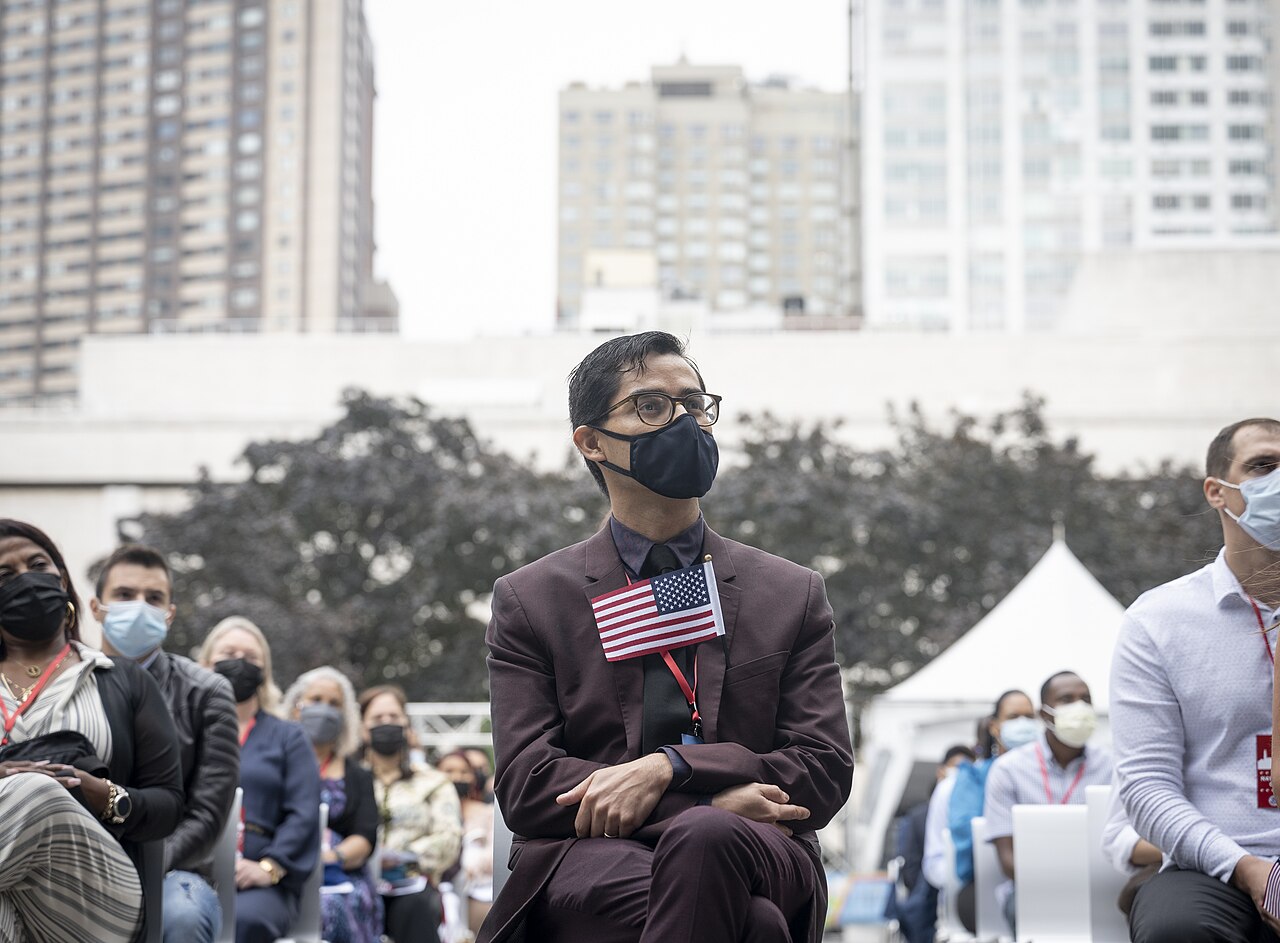
Last month, USCIS issued two new policies on how its officers should assess the 'good moral character' of naturalization applicants. Good moral character, a statutory requirement for U.S. citizenship, dates back to the 18th century.
Two New Rules Issued Last Month
The first is a policy update issued by USCIS on August 15, which requires officers to adopt a stricter, more comprehensive 'holistic analysis' when assessing an applicant's good moral character, rather than simply using a checklist to confirm the absence of misconduct. For the first time, the policy explicitly requires officers to consider positive 'good moral character' factors, such as community service, caregiving, education, stable lawful employment, tax compliance, and length of residence in the United States. When an applicant has a history of misconduct, the new policy also requires officers to scrutinize it carefully and focus on evidence of rehabilitation and reform.
The second is a policy alert issued by USCIS on August 29, which tightens guidance on how officers should handle issues such as 'illegal voter registration,' 'illegal voting,' and 'false citizenship claims' when adjudicating naturalization applications. The adjustment aims to align USCIS policy with the deportability provisions of the Immigration and Nationality Act (INA), and notes that such conduct may cause a failure of the 'good moral character' assessment.
The update also provides that if a foreign national applying for naturalization votes in violation of any federal, state, or local constitutional provision, statute, ordinance, or regulation, USCIS will issue a Notice to Appear under INA § 237(a)(6)(A), unless the person qualifies for the limited exception under INA § 237(a)(6)(B). In such a case, the applicant's N-400 (Application for Naturalization) will be denied. INA § 318 provides that USCIS may not approve an N-400 application if the applicant is in removal proceedings.
False citizenship is both a crime and a bar to naturalization; however, for a foreign national found to have registered to vote, the burden of proof rests on the individual to show that the registration form did not contain a question about U.S. citizenship and that he or she did not falsely claim citizenship.
The 'Good Moral Character' Requirement for Naturalization
The requirement that naturalization applicants demonstrate 'good moral character' is not new. In fact, it has always been part of U.S. immigration law. The Naturalization Act of 1790 required applicants to have 'good character'; in 1795, Congress explicitly required 'good moral character,' and Congress has included this requirement in its naturalization laws ever since. Currently, the concept is embodied in INA §§ 101(f), 316(a), and 8 C.F.R. § 316.10.
These policy updates do not rewrite the law; rather, they provide guidance to officers in weighing positive and negative factors when adjudicating whether an applicant meets the long-standing 'good moral character' requirement. Under INA § 316(a), a naturalization applicant must have 'been and still be a person of good moral character' during the statutory period (generally five years; three years for certain spouses). INA § 101(f) lists bars to 'good moral character' (such as 'habitual drunkards' and certain crimes) and ends with a 'catch-all clause': even if a person does not meet any listed bar, he or she may still be found lacking good moral character 'for other reasons.' Thus, the law grants officers considerable discretion to determine whether an applicant possesses good moral character.
8 C.F.R. § 316.10 sets forth permanent bars to 'good moral character' (such as murder and aggravated felonies) and conditional bars during the statutory period (such as certain crimes and 'unlawful acts' that adversely reflect on character), and confirms the discretionary and case-by-case nature of the 'good moral character' inquiry.
USCIS Scrutiny and Enforcement
These policy changes indicate that the administration's goals include both strengthening scrutiny of immigration benefit applicants and enhancing USCIS's role in immigration enforcement activities. Before these updates were issued, USCIS had issued a memorandum on February 28, 2025, titled 'Issuance of Notices to Appear in Cases Involving Inadmissible and Deportable Foreign Nationals' (PM-602-0187). That memorandum greatly expanded the authority of USCIS officers to issue Notices to Appear to immigration benefit applicants known to be deportable.
