
DHS Issues Final Rules on H-1B and EAD, Set to Take Effect in Mid-January 2025
The article covers two final rules DHS issued in December 2024: permanent extension of EAD automatic extensions to up to 540 days, effective January 13, 2025, and the H-1B modernization rule effective January 17, 2025, addressing specialty occupation criteria, cap exemptions, beneficiary-owners, site visits and third-party placement.
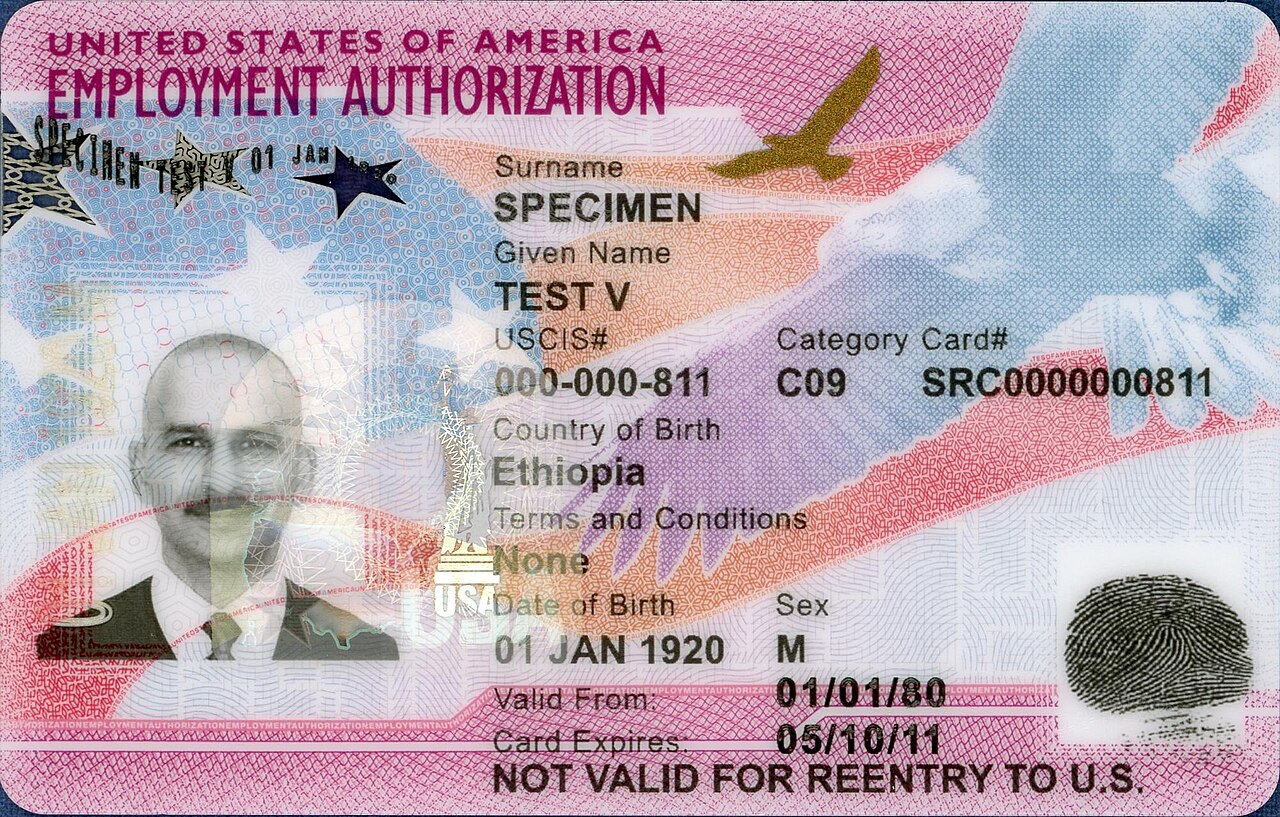
The U.S. Department of Homeland Security (DHS) has issued two final rules that will affect H-1B and EAD work permit documents. These rules will take effect before the new president takes office.
Extension of Automatic EAD Validity Periods
On December 10, 2024, DHS, through U.S. Citizenship and Immigration Services (USCIS), published a final rule amending DHS regulations to permanently increase the automatic extension period for EAD work permits from up to 180 days to up to 540 days for certain renewal applicants who timely file Form I-765.
After two interim rules, DHS has finalized and made permanent the most recent interim rule to help eligible EAD renewal applicants avoid gaps in work authorization caused by lengthy USCIS processing times. The final rule takes effect on January 13, 2025, one week before the new president's inauguration.
Eligible individuals include:
- Individuals applying for adjustment of status
- Spouses of H-1B principal applicants, who have an unexpired I-94 showing H-4 status and whose H-1B spouse's I-140 petition has been approved
- Spouses of E nonimmigrants, who hold an unexpired I-94 showing E-1S, E-2S, or E-3S status
- Spouses of L-1 nonimmigrants, who hold an unexpired I-94 showing L-2S status
- Individuals granted Temporary Protected Status (TPS)
- Refugees
- Individuals granted asylum and those with pending asylum applications
- Violence Against Women Act (VAWA) self-petitioners
- Individuals granted withholding of removal or deportation
H-1B Modernization Final Rule
On December 18, 2024, DHS, through USCIS, issued a final rule aimed at modernizing and improving the efficiency of the H-1B program, clarifying H-1B requirements, providing more benefits and flexibility to petitioners and beneficiaries, and strengthening program integrity measures. Starting January 17, 2025, any H-1B petition must use the updated version of Form I-129 (Petition for a Nonimmigrant Worker).
Background
On October 23, 2023, DHS, through USCIS, published a Notice of Proposed Rulemaking (NPRM) in the Federal Register titled 'Modernizing H-1B Requirements.' The NPRM proposed changes to certain areas of the H-1B regulations and sought to clarify and codify existing rules established through case law and USCIS policy guidance.
After a 60-day public comment period, DHS finalized the portions of the NPRM related to H-1B registration through a final rule titled 'Improving the H-1B Registration Selection Process and Program Integrity,' published on February 2, 2024, and effective March 4, 2024. The February 2, 2024 final rule implemented anti-fraud measures and timely introduced a beneficiary-centric H-1B cap registration process for the FY 2025 H-1B cap season. It also provided that, starting with the FY 2026 H-1B cap season, the registration fee per beneficiary would increase from $10 to $215.
The December 18, 2024 final rule is the second final rule stemming from the October 23, 2024 NPRM. The following provisions will take effect on January 17, 2025.
Clarifying Requirements and Improving Program Efficiency
1. Definition and Criteria for Specialty Occupation
DHS will: (1) revise the regulatory definition and criteria for determining whether a position qualifies as a 'specialty occupation'; (2) clarify that an employer's requirement of a bachelor's degree 'normally' does not mean the employer must 'always' require a bachelor's degree as a specialty occupation criterion; and (3) clarify that a petitioner may accept a range of qualifying degree fields, provided there is a direct relationship between the required degree field and the duties of the position.
2. Amended Petitions
DHS will also update regulations to specify when an amended or new petition must be filed if an H-1B worker changes worksite outside the intended area of employment, consistent with current policy guidance.
3. Deference to Prior USCIS Eligibility Determinations in Extension Petitions
DHS will codify its current deference policy, specifying that when adjudicating Form I-129 involving the same parties and same basic facts, adjudicators generally should defer to prior USCIS eligibility determinations unless they find a material error in the prior approval or other material change or information affecting the petitioner, beneficiary, or the petitioner's eligibility.
4. Proof of Maintenance of Status
DHS will update regulations to explicitly require that a petition for extension of stay or change of status include proof that the beneficiary is maintaining status.
5. Elimination of Itinerary Requirement for H Classifications
DHS will eliminate the itinerary requirement for H petitions where services or training will be provided at multiple locations, affecting all H classifications.
6. Validity Period Expiring Before Adjudication
DHS will update regulations to allow petitioners to amend the initially requested validity period (i.e., employment dates) when a petition is found approvable but the requested employment end date has already passed. This typically occurs when USCIS finds the petition approvable following a favorable outcome on a motion to reopen, motion to reconsider, or appeal.
Providing More Benefits and Flexibility
1. H-1B Cap Exemptions
DHS will provide additional flexibility for petitions involving nonprofit and governmental research organizations and certain beneficiaries not directly employed by a qualifying organization by modernizing regulatory definitions. Specifically, DHS will expand the definitions of 'nonprofit research organization' and 'governmental research organization' to allow nonprofit entities or governmental research organizations whose basic activity is research but that are not primarily engaged in research or whose primary mission is not research to qualify as nonprofit research entities.
In addition, DHS will amend regulations to recognize that certain beneficiaries may be eligible for an H-1B cap exemption even if not directly employed by a qualifying institution, as long as they spend at least half of their time (rather than the majority or more than half as required under current regulations) performing work necessary to support or advance the essential purpose, mission, objectives, or functions of such exempt institution.
DHS also explicitly states that the requirement that a beneficiary spend at least half of their work time performing job duties 'at' a qualifying institution should not be construed to mean those duties must be performed on-site at the qualifying institution. This change is based on DHS's recognition that many positions can be performed remotely and is intended to emphasize the work duties rather than the physical location where they are performed.
2. Automatic Extension of Employment Authorization for "Cap-Gap"
To avoid disruptions in lawful status and work authorization during the process of applying for a change of status to H-1B, DHS provides flexibility for students seeking to change status to H-1B by automatically extending the validity of their F-1 status and post-completion OPT or the 24-month post-completion OPT extension, if applicable, until April 1 of the relevant fiscal year.
Strengthening Program Integrity
1. Provisions to Ensure Bona Fide Job Offers in Specialty Occupations
- Bona Fide Employment: DHS requires petitioners to establish that they have a bona fide position in a specialty occupation available for the beneficiary as of the requested start date.
- Contracts: DHS will codify its authority to require contracts or similar evidence to determine whether the position is bona fide.
- Labor Condition Application Correspondence: DHS will update regulations to explicitly incorporate its existing authority to ensure that the labor condition application supports and properly corresponds to the petition.
- Revision of the Definition of U.S. Employer: DHS will revise the definition of "U.S. employer" to codify current DHS policy that the petitioner must have a bona fide job offer for the beneficiary to work in the United States as of the requested start date, and add a new requirement that the petitioner must have a legal presence in the United States and be able to accept service of legal process in the United States.
- Employer-Employee Relationship: DHS will remove the employer-employee requirement from the definition of H-1B employer to eliminate obstacles for beneficiary-owned petitioners; codify in the definition of "U.S. employer" the existing requirement that the petitioner must have a bona fide job offer for the beneficiary to work in the United States; and add a new requirement that the petitioner have a legal presence in the United States and be able to accept service of legal process. In this context, legal presence means the petitioner is legally established and authorized to conduct business in the United States.
2. Beneficiary-Owners
DHS clarifies that owners of certain petitioning entities may be eligible for H-1B status ('beneficiary-owners'), while setting reasonable parameters for H-1B eligibility when the beneficiary has a controlling interest in the petitioning entity. USCIS will limit the validity period for an initial H-1B petition and the first extension to 18 months each, and require the beneficiary to spend at least a majority of their time performing specialty occupation duties.
3. Site Visits
DHS will codify USCIS's authority to conduct site visits and clarify that refusal to cooperate with a site visit may lead to denial or revocation of the petition.
4. Third-Party Placement
DHS explicitly states that if an H-1B worker will be placed at a third party—that is, assigned to fill a position with a third-party organization—the work performed by the beneficiary for the third party must qualify as a specialty occupation, and in determining whether the position is a specialty occupation, the third party's requirements are more important than the petitioner's requirements.
